Buy respirare-onlus.eu ?
We are moving the project
respirare-onlus.eu .
Are you interested in purchasing the domain
respirare-onlus.eu ?
domain@kv-gmbh.de · 0541-91531010
Buy respirare-onlus.eu ?
Do female wolves hunt more than male wolves?
In wolf packs, both male and female wolves participate in hunting. However, research has shown that female wolves often take on a more prominent role in hunting, especially when it comes to providing food for their young pups. Female wolves are typically more agile and quick, making them well-suited for chasing and catching prey. Additionally, female wolves may also have a higher success rate in hunting due to their smaller size and ability to sneak up on prey more effectively. Overall, while both male and female wolves contribute to hunting, female wolves may be more active in the process, especially when it comes to providing for their offspring. **
Are wolves dangerous?
Wolves can be dangerous to humans if they feel threatened or if they are in a situation where they are hungry and see humans as potential prey. However, wolves generally avoid human contact and attacks are rare. It is important to respect their space and not to approach or feed them in the wild. In general, wolves are not considered to be a significant threat to humans. **


Similar search terms for Wolves
Top-Angebote
Products related to Wolves:
-
Quercus Raised by Wolves Series By Jennifer Lynn Barnes 3 Books Collection Set (Raised by Wolves, Trial by Fire & Taken by Storm)Titles in this set: 1. Raised by Wolves 2. Trial by Fire 3. Taken by Storm Description: Raised by Wolves Werewolf pack life is about order, but Bryn is about to break the rules, with hair-raising results. At the age of four, Bryn watched a rabid werewolf brutally murder her parents. Alone in the world, she was rescued and taken in by Callum, the alpha of his pack. Now, Bryn is a human among werewolves, adhering to their strict social hierarchy. Little fazes her. But the pack's been keeping a secret, and when Bryn goes exploring against Callum's orders, she finds Chase, a newly turned teen werewolf locked in a cage. Terrifying memories of the attack on her parents come flooding back. Bryn needs answers, and only Chase can help. Suddenly, all allegiances to the pack no longer matter. It's Bryn and Chase against the world, whatever the consequences. With an electrifying link between a tough heroine and a dangerous werewolf at its heart, Raised by Wolves will leave you howling for more. Trial by Fire Bryn has the usual worries: a new boyfriend, a new school and a new home. But she has one major concern that her friends don't have: she is an alpha - a human girl in charge of her own werewolf pack. When Bryn and her closest friends, Dev and Lake, broke from the werewolf Callum's pack, it had felt right. Together with Chase, Bryn's new love, they had rescued some newly made female werewolves from a dangerous master and established their own pack, with Bryn as leader. Yet Bryn has always resented the rules of this life - the constant bowing to authority and submission to the alpha. And she is determined to live differently, to be better leader. Then one night, a badly beaten werewolf shows up on her territory. He desperately needs help. But taking him in could violate the rules, and no one knows better than Bryn the costs of challenging them. Obedience is law in pack life, but is Bryn ready to break the rules again? Taken by Storm Bryn knows first-hand that being the alpha of a werewolf pack means making hard decisions, and that being human makes things a thousand times worse. She is prepared to give up her humanity, but the wolf who promised to change her is waiting - though for what, she doesn't know. Still human, she must take her place in the werewolf Senate, the shadowy democracy that rules the packs. Standing side by side with ancient werewolves is enough of a challenge, especially when they are called on to deal with a problem that involves memories she would rather forget . . . With bodies stacking up and pressure closing in from all sides, Bryn and her pack are forced to turn to old enemies and friends for help. Especially when it starts to look like this time, the monster might be one of their own.13,89 £*Shipping: 2,99 £Secure redirect to the provider



-
Are wolves cannibals?
Wolves are not considered cannibals as they typically do not prey on or consume members of their own species. However, in rare cases, wolves have been known to kill and eat other wolves, especially in times of food scarcity or territorial disputes. Overall, cannibalism is not a common behavior among wolves in the wild. **
-
Why don't wolves bark?
Wolves do not bark because they have different vocalizations compared to domestic dogs. Wolves communicate through howls, growls, whines, and barks, which are used for specific purposes such as signaling danger, establishing territory, or communicating with pack members. Barking is a behavior that has been developed in domestic dogs through selective breeding and is used as a form of communication with humans. Wolves rely more on their howls and other vocalizations to communicate within their pack and with other wolves in the area. **
-
Where do wolves die?
Wolves can die in various locations depending on the circumstances. They may die in their natural habitats such as forests, mountains, or tundras due to factors like old age, disease, or injuries sustained during hunting or territorial disputes. Wolves can also die as a result of human activities, such as hunting, trapping, or vehicle collisions. In some cases, wolves may die in captivity, such as in zoos or wildlife sanctuaries. **
-
What are gray wolves?
Gray wolves, also known as timber wolves, are large carnivorous mammals that are native to North America, Eurasia, and the Middle East. They are known for their distinctive gray fur, pointed ears, and bushy tails. Gray wolves are social animals that live and hunt in packs, with a complex social structure and communication system. They are apex predators in their ecosystems, playing a crucial role in maintaining the balance of the food chain. **


What do wolves eat?
Wolves are carnivorous animals and primarily eat meat. Their diet consists of a variety of animals, including deer, elk, moose, bison, and smaller mammals like rabbits and rodents. They are also known to scavenge for carrion and occasionally consume fruits and vegetation. Wolves are skilled hunters and work together in packs to take down large prey. **
When do wolves sleep?
Wolves are primarily nocturnal animals, meaning they are most active during the night. They typically sleep during the day, finding a quiet and sheltered spot to rest. However, they may also take short naps throughout the night if they are not actively hunting or patrolling their territory. Wolves are known to be adaptable and may adjust their sleeping patterns based on their environment and the availability of prey. **
Top-Angebote
Products related to Wolves:
-
Skip's Garage Newberry College Wolves Cornhole Board Set"These boards are Regulation Sized 2x4 (24"" Wide x 48"" Long). They are built with Premium Wood 1x4 Frames and Solid Wood 2x3's for the legs. Both boards feature a 1/2"" Sanded Birch Plywood Surface for perfect playability."257,45 $*Shipping: 0,00 $Secure redirect to the provider
-
Quercus Raised by Wolves Series By Jennifer Lynn Barnes 3 Books Collection Set (Raised by Wolves, Trial by Fire & Taken by Storm)Titles in this set: 1. Raised by Wolves 2. Trial by Fire 3. Taken by Storm Description: Raised by Wolves Werewolf pack life is about order, but Bryn is about to break the rules, with hair-raising results. At the age of four, Bryn watched a rabid werewolf brutally murder her parents. Alone in the world, she was rescued and taken in by Callum, the alpha of his pack. Now, Bryn is a human among werewolves, adhering to their strict social hierarchy. Little fazes her. But the pack's been keeping a secret, and when Bryn goes exploring against Callum's orders, she finds Chase, a newly turned teen werewolf locked in a cage. Terrifying memories of the attack on her parents come flooding back. Bryn needs answers, and only Chase can help. Suddenly, all allegiances to the pack no longer matter. It's Bryn and Chase against the world, whatever the consequences. With an electrifying link between a tough heroine and a dangerous werewolf at its heart, Raised by Wolves will leave you howling for more. Trial by Fire Bryn has the usual worries: a new boyfriend, a new school and a new home. But she has one major concern that her friends don't have: she is an alpha - a human girl in charge of her own werewolf pack. When Bryn and her closest friends, Dev and Lake, broke from the werewolf Callum's pack, it had felt right. Together with Chase, Bryn's new love, they had rescued some newly made female werewolves from a dangerous master and established their own pack, with Bryn as leader. Yet Bryn has always resented the rules of this life - the constant bowing to authority and submission to the alpha. And she is determined to live differently, to be better leader. Then one night, a badly beaten werewolf shows up on her territory. He desperately needs help. But taking him in could violate the rules, and no one knows better than Bryn the costs of challenging them. Obedience is law in pack life, but is Bryn ready to break the rules again? Taken by Storm Bryn knows first-hand that being the alpha of a werewolf pack means making hard decisions, and that being human makes things a thousand times worse. She is prepared to give up her humanity, but the wolf who promised to change her is waiting - though for what, she doesn't know. Still human, she must take her place in the werewolf Senate, the shadowy democracy that rules the packs. Standing side by side with ancient werewolves is enough of a challenge, especially when they are called on to deal with a problem that involves memories she would rather forget . . . With bodies stacking up and pressure closing in from all sides, Bryn and her pack are forced to turn to old enemies and friends for help. Especially when it starts to look like this time, the monster might be one of their own.13,89 £*Shipping: 2,99 £Secure redirect to the provider
-
Do female wolves hunt more than male wolves?
In wolf packs, both male and female wolves participate in hunting. However, research has shown that female wolves often take on a more prominent role in hunting, especially when it comes to providing food for their young pups. Female wolves are typically more agile and quick, making them well-suited for chasing and catching prey. Additionally, female wolves may also have a higher success rate in hunting due to their smaller size and ability to sneak up on prey more effectively. Overall, while both male and female wolves contribute to hunting, female wolves may be more active in the process, especially when it comes to providing for their offspring. **
-
Are wolves dangerous?
Wolves can be dangerous to humans if they feel threatened or if they are in a situation where they are hungry and see humans as potential prey. However, wolves generally avoid human contact and attacks are rare. It is important to respect their space and not to approach or feed them in the wild. In general, wolves are not considered to be a significant threat to humans. **
-
Are wolves cannibals?
Wolves are not considered cannibals as they typically do not prey on or consume members of their own species. However, in rare cases, wolves have been known to kill and eat other wolves, especially in times of food scarcity or territorial disputes. Overall, cannibalism is not a common behavior among wolves in the wild. **
-
Why don't wolves bark?
Wolves do not bark because they have different vocalizations compared to domestic dogs. Wolves communicate through howls, growls, whines, and barks, which are used for specific purposes such as signaling danger, establishing territory, or communicating with pack members. Barking is a behavior that has been developed in domestic dogs through selective breeding and is used as a form of communication with humans. Wolves rely more on their howls and other vocalizations to communicate within their pack and with other wolves in the area. **
Similar search terms for Wolves
-
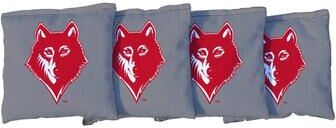
Skip's Garage Arkansas State Red Wolves 2x4 Cornhole Boards"These boards are Regulation Sized 2x4 (24"" Wide x 48"" Long). They are built with Premium Wood 1x4 Frames and Solid Wood 2x3's for the legs. Both boards feature a 1/2"" Sanded Birch Plywood Surface for perfect playability."299,99 $*Shipping: 0,00 $Secure redirect to the provider
-
Skip's Garage Arkansas State Red Wolves 2x4 Cornhole Boards"These boards are Regulation Sized 2x4 (24"" Wide x 48"" Long). They are built with Premium Wood 1x4 Frames and Solid Wood 2x3's for the legs. Both boards feature a 1/2"" Sanded Birch Plywood Surface for perfect playability."347,99 $*Shipping: 0,00 $Secure redirect to the provider
-
Where do wolves die?
Wolves can die in various locations depending on the circumstances. They may die in their natural habitats such as forests, mountains, or tundras due to factors like old age, disease, or injuries sustained during hunting or territorial disputes. Wolves can also die as a result of human activities, such as hunting, trapping, or vehicle collisions. In some cases, wolves may die in captivity, such as in zoos or wildlife sanctuaries. **
-
What are gray wolves?
Gray wolves, also known as timber wolves, are large carnivorous mammals that are native to North America, Eurasia, and the Middle East. They are known for their distinctive gray fur, pointed ears, and bushy tails. Gray wolves are social animals that live and hunt in packs, with a complex social structure and communication system. They are apex predators in their ecosystems, playing a crucial role in maintaining the balance of the food chain. **
-
What do wolves eat?
Wolves are carnivorous animals and primarily eat meat. Their diet consists of a variety of animals, including deer, elk, moose, bison, and smaller mammals like rabbits and rodents. They are also known to scavenge for carrion and occasionally consume fruits and vegetation. Wolves are skilled hunters and work together in packs to take down large prey. **
-
When do wolves sleep?
Wolves are primarily nocturnal animals, meaning they are most active during the night. They typically sleep during the day, finding a quiet and sheltered spot to rest. However, they may also take short naps throughout the night if they are not actively hunting or patrolling their territory. Wolves are known to be adaptable and may adjust their sleeping patterns based on their environment and the availability of prey. **
* All prices are inclusive of VAT and, if applicable, plus shipping costs. The offer information is based on the details provided by the respective shop and is updated through automated processes. Real-time updates do not occur, so deviations can occur in individual cases. ** Note: Parts of this content were created by AI.